
Onboard sellers and supply
Verify sellers, define listing rights, collect asset data and structure catalog quality controls.
Auction marketplace overview
Bidvantic helps teams build auction marketplaces where sellers list assets, buyers compete with confidence, operators govern transactions and marketplace leaders grow revenue with clean data.
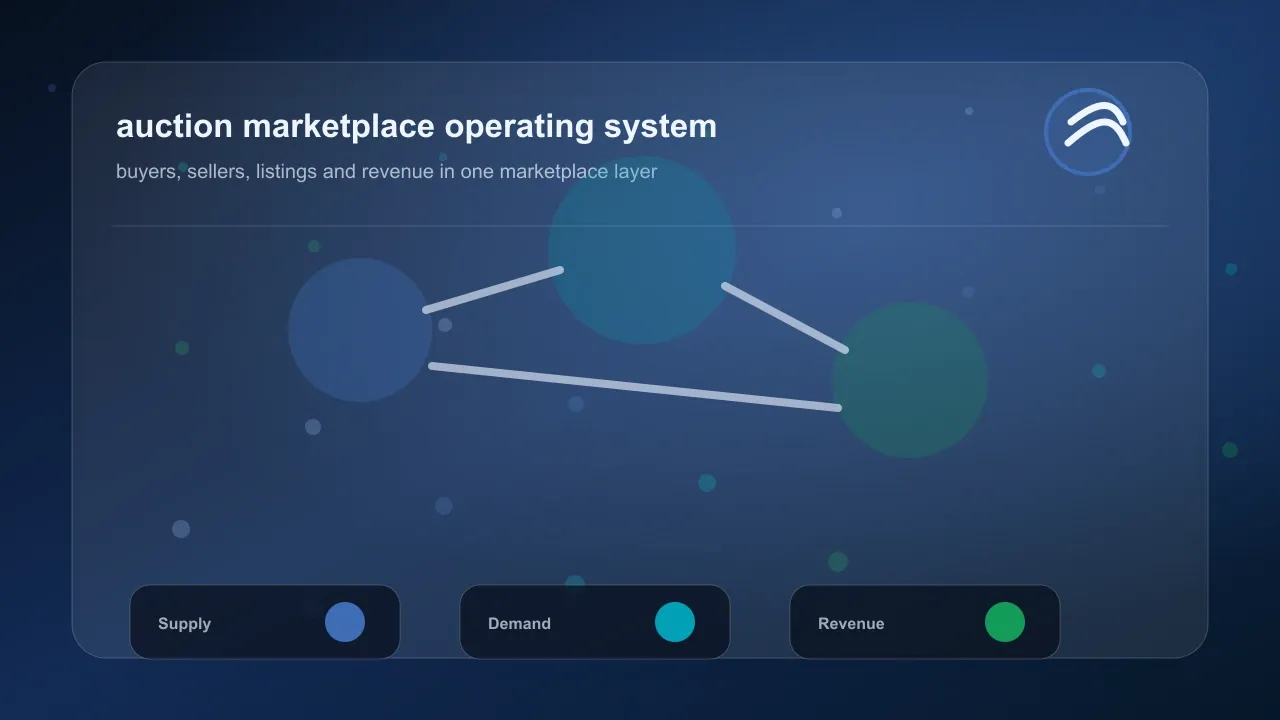
Sellers, buyers, operators and service teams work in one governed transaction layer.
Demand, supply, bid depth, conversion and repeat participation become visible.
Commissions, buyer premiums, seller fees, deposits and payouts can follow marketplace rules.
Verification, moderation, audit trails, approvals and dispute evidence support marketplace credibility.
Marketplace context
Successful marketplaces balance supply quality, buyer confidence, transaction rules, payment flow, seller performance and operator control. Bidvantic gives marketplace teams a structured foundation for categories, listings, bidding models, commissions, analytics and automation so the business can scale beyond manual coordination. Best fit: B2B auction marketplaces, vertical trading networks, consignment platforms, dealer ecosystems, liquidation marketplaces and managed marketplace operators.
Best fit: B2B auction marketplaces, vertical trading networks, consignment platforms, dealer ecosystems, liquidation marketplaces and managed marketplace operators.Operating blueprint
Bidvantic connects sellers, listings, buyers, auction events, revenue rules, payments, fulfilment and analytics into one marketplace operating system.
Map your operating modelWorkflow
Each stage connects marketplace strategy with participant experience, transaction control and measurable growth.
Verify sellers, define listing rights, collect asset data and structure catalog quality controls.
Segment buyers, approve participation, manage deposits and surface relevant listings.
Support timed auctions, live events, private rooms, negotiated paths or buy-now hybrids.
Coordinate commissions, premiums, invoices, payment checkpoints, award notices and fulfilment status.
Use analytics to tune categories, seller quality, buyer retention and revenue performance.
Capabilities
Each capability supports stronger liquidity, better participant trust, cleaner transactions and operator visibility.
Give sellers controlled spaces for listings, catalogs, documents, results and performance.
Help buyers find relevant auctions, lots, sellers, watchlists and saved searches.
Run forward, reverse, sealed, timed, private or hybrid events where the marketplace model needs them.
Configure seller commission, buyer premium, listing fees, subscriptions and revenue-share models.
Track deposits, invoices, payment confirmation, refunds, payouts and settlement readiness.
Control seller approval, buyer verification, listing review, abuse signals and transaction exceptions.
Measure GMV, liquidity, conversion, category depth, take rate and operational health.
Give marketplace teams queues for approvals, support, exceptions, payments and content operations.
Experience
The experience balances seller quality, buyer confidence, transaction progress, revenue control and marketplace growth signals.
Manage auction marketplace with participant status, listings, auction activity, revenue rules and exceptions in one view.
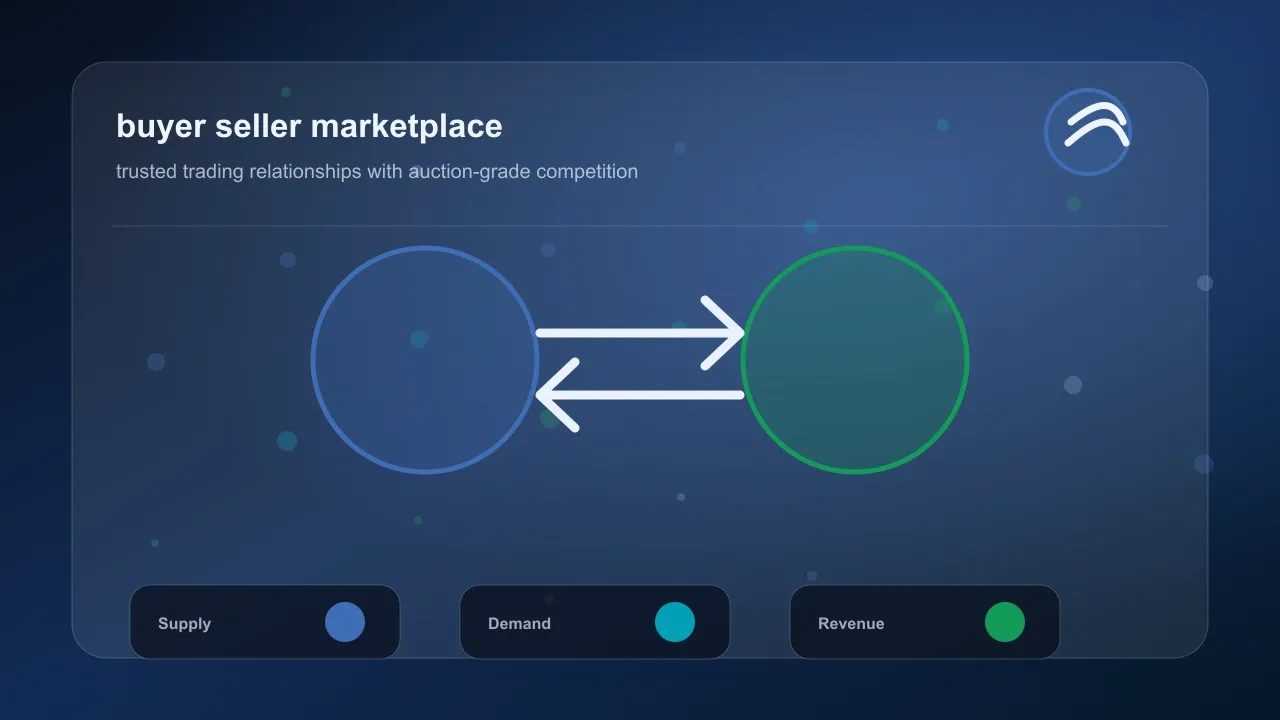
Give sellers and buyers clear next actions, trustworthy rules, relevant notifications and transaction status.

Review liquidity, conversion, GMV, take rate, participant quality and operational bottlenecks.
Controls
Controls protect marketplace trust, transaction quality, revenue accuracy and participant accountability.
Prevent unverified sellers from publishing listings or collecting transactions.
Control deposits, KYC, category access and bidding eligibility.
Require asset details, images, documents, terms and moderation before launch.
Apply marketplace revenue rules consistently by category, seller or transaction type.
Block fulfilment until deposits, invoices or settlement checkpoints are satisfied.
Retain listing changes, bids, messages, fees, payments, approvals and disputes.
Role impact
Bidvantic keeps operator, seller, buyer and leadership needs aligned in one marketplace workflow.
Use auction marketplace to coordinate participants, listings, auctions, revenue rules and transaction evidence.
Governed operationsPublish stronger listings, understand sale status, manage obligations and improve buyer confidence.
Higher supply qualityFind relevant opportunities, understand rules, bid with clarity and complete transactions with fewer gaps.
Better participationReview liquidity, GMV, take rate, conversion, seller quality and operational performance.
Growth intelligenceConnected marketplace flow
These connections help marketplace activity move from discovery and bidding into completed, reportable transactions.
Decision room
Use these answers to pressure-test the auction marketplace operating model before configuration begins.
Ask a specific questionAn auction marketplace is a multi-party platform where sellers list assets or opportunities and buyers compete through auction or related transaction models.
Yes. Bidvantic can support seller onboarding, listing management, seller dashboards, commissions and marketplace-level governance.
Yes. Marketplace models can include timed auctions, live events, private bidding, sealed offers, buy-now and negotiated workflows.
Common models include seller commission, buyer premium, listing fees, subscriptions, success fees, services and payment-related fees.
Start with one high-quality category where supply is reliable, buyers are identifiable and transaction rules can be repeated.
Marketplace planning
Bring your category focus, seller model, buyer journey, fee rules, payment requirements and growth goals. We will map the right auction marketplace workflow.