
Approve vendor accounts
Verify sellers, assign plans, set permissions and capture seller terms.
Multi Vendor Marketplace
Bidvantic helps marketplace operators onboard many sellers, govern listing quality, manage category rules, coordinate auctions, track seller performance and protect buyer trust.
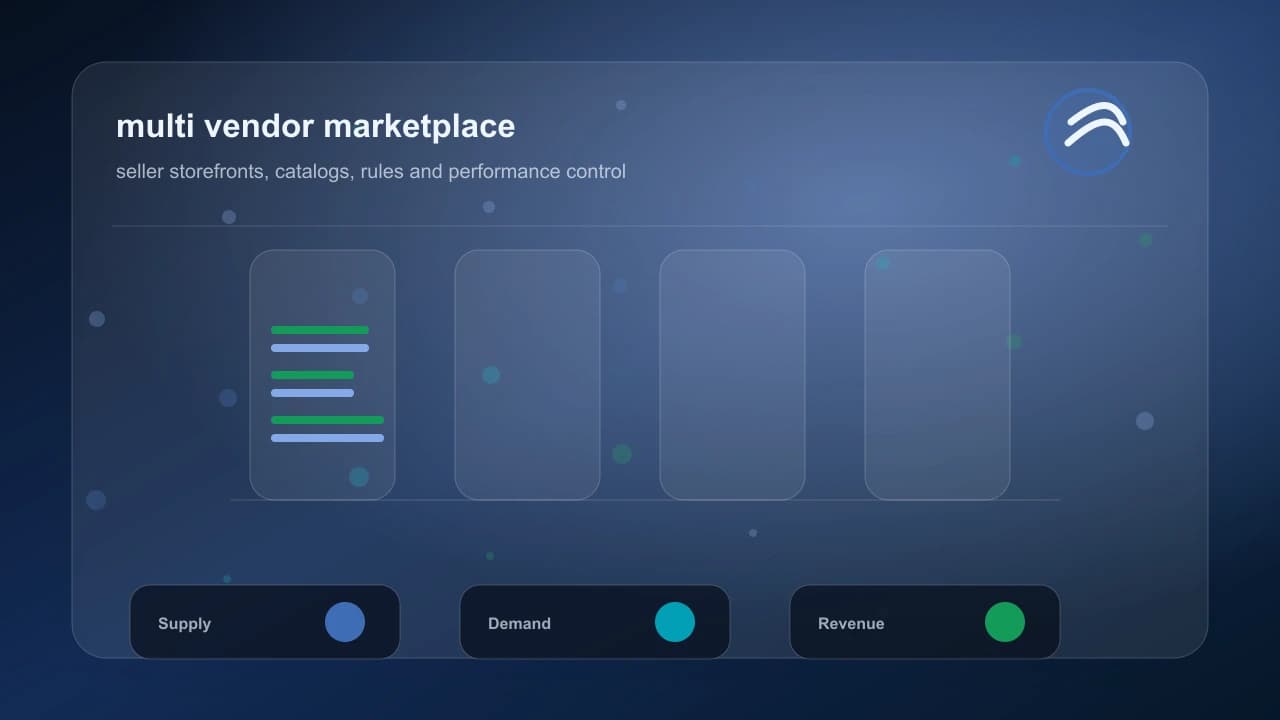
Many vendors can operate under consistent marketplace rules.
Operators can review content, documents, terms and category fit before launch.
Fees, commissions and seller payouts stay tied to transaction records.
Seller verification and performance controls reduce marketplace risk.
Marketplace context
Letting vendors list directly can increase supply, but it also creates quality, pricing, support and trust risk. Bidvantic helps operators define seller roles, storefront rules, listing approvals, commission models, performance dashboards and transaction controls. Best fit: platforms where multiple sellers publish lots, run events or contribute inventory under one marketplace brand.
Best fit: platforms where multiple sellers publish lots, run events or contribute inventory under one marketplace brand.Operating blueprint
Bidvantic connects seller onboarding, listing workflows, category permissions, auction rules, fee logic and performance monitoring.
Map your operating modelWorkflow
Each stage connects marketplace strategy with participant experience, transaction control and measurable growth.
Verify sellers, assign plans, set permissions and capture seller terms.
Control branding, categories, listing limits, approval needs and transaction responsibilities.
Check asset data, documents, media, reserve logic and marketplace policy before publish.
Allow seller-managed, operator-managed or hybrid auction operations.
Measure listing quality, conversion, disputes, revenue, fulfillment and buyer feedback.
Capabilities
Each capability supports stronger liquidity, better participant trust, cleaner transactions and operator visibility.
Bring sellers into the marketplace with verification, terms and permission setup.
Give vendors controlled profiles, catalogs, listings and performance views.
Limit sellers to approved categories, geographies, inventory types or transaction models.
Review assets, documents, photos, descriptions and seller terms before launch.
Define whether sellers can edit events, set reserves, approve winners or message buyers.
Calculate marketplace fees, seller revenue, buyer premiums and settlement status.
Track conversion, GMV, buyer complaints, fulfilment speed and listing quality.
Pause listings, hold payouts, resolve disputes and moderate seller behavior.
Experience
The experience balances seller quality, buyer confidence, transaction progress, revenue control and marketplace growth signals.
Manage multi vendor marketplace with participant status, listings, auction activity, revenue rules and exceptions in one view.

Give sellers and buyers clear next actions, trustworthy rules, relevant notifications and transaction status.
Review liquidity, conversion, GMV, take rate, participant quality and operational bottlenecks.
Controls
Controls protect marketplace trust, transaction quality, revenue accuracy and participant accountability.
Block vendor publishing until identity, business and terms checks are complete.
Review marketplace-critical content before buyers see it.
Separate self-service sellers from operator-managed sellers.
Show sellers how commission, premiums or listing fees affect proceeds.
Hold seller settlement until payment and fulfilment obligations are satisfied.
Use performance data to warn, restrict or remove weak sellers.
Role impact
Bidvantic keeps operator, seller, buyer and leadership needs aligned in one marketplace workflow.
Use multi vendor marketplace to coordinate participants, listings, auctions, revenue rules and transaction evidence.
Governed operationsPublish stronger listings, understand sale status, manage obligations and improve buyer confidence.
Higher supply qualityFind relevant opportunities, understand rules, bid with clarity and complete transactions with fewer gaps.
Better participationReview liquidity, GMV, take rate, conversion, seller quality and operational performance.
Growth intelligenceConnected marketplace flow
These connections help marketplace activity move from discovery and bidding into completed, reportable transactions.
Decision room
Use these answers to pressure-test the multi vendor marketplace operating model before configuration begins.
Ask a specific questionIt is a marketplace where multiple sellers list and sell through auctions under a shared marketplace brand and rules.
Yes, with approval gates and permission levels controlled by the operator.
Yes. Commissions, subscriptions, listing fees and payout rules can vary by seller or category.
Verification, listing review, payment controls, moderation and seller performance tracking help protect trust.
Yes. Bidvantic can support self-service, managed and hybrid seller operating models.
Marketplace planning
Bring your category focus, seller model, buyer journey, fee rules, payment requirements and growth goals. We will map the right auction marketplace workflow.